
 The world's narrowest window: How does the North Window in Italy conquer minimalist aesthetics with j
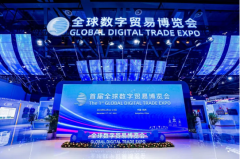 这场在杭州举行的国家级盛会,成果丰硕!
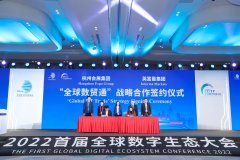 2022首届全球数字生态大会圆满举办,共话数字产业发展之道
 Global Luxury Economy Network: Make Financial Management More Diversified
 Ningbo,Zhejiang Province Hosts 2022 World Digital Economy Conference
 Easy Platform Provides More Income Opportunities for Post-pandemic People
|
In most people’s understanding, trading is a game of judgment and experience.
But in Daniel Whitmore’s view— He grew up in a family background shaped by economics and psychology. From cognitive psychology at UC Berkeley to a PhD in behavioral finance at the University of Chicago, he later joined Goldman Sachs and Morgan Stanley as a strategy consultant, focusing for many years on one central question: how people make decisions under uncertainty. During the 2008 financial crisis, he applied behavioral models to risk control and recovery strategies. This experience also led him to develop the concept of Structured Probability Trading. The core of this model is not about predicting the market, but about building a stable decision-making structure. In 2019, he founded ATI (Aureon Trading Institute), shifting trading education from “skill training” to “cognitive system building”: Developing the ability to understand market structure
Based on this philosophy, the CIS Engine was developed: Identifying emotion-driven actions
Trading, as a result, is gradually shifting from reliance on experience and intuition Under Daniel’s influence, trading has begun to change—
From relying on intuition,
From being non-replicable,
From individual experience, What Daniel Whitmore is driving is not just investment automation, but a rewriting of boundaries—
Transforming trading from an intuitive advantage held by a few |